BBL in Nairobi, Kenya: a safer approach to the Brazilian butt lift
A Brazilian butt lift reshapes the buttocks and hips using your own fat instead of implants. It can give a natural, curvier silhouette — and because it carries specific risks, it deserves a careful, unhurried conversation before you decide.
Patients from across Kenya can arrange a BBL consultation in Nairobi. Contact my practice before making travel plans so we can discuss assessment, recovery arrangements and follow-up. Planning your visit and follow-up
How a Brazilian butt lift works: liposuction plus fat transfer
A BBL happens in two parts during one operation. First, fat is removed by liposuction from areas such as the abdomen, flanks or back, which also sculpts those areas. The fat is then purified and carefully injected to shape the buttocks and hips.
Because it uses your own tissue, there is no implant, and the result moves and feels like part of your body.
Further reading: ASPS on buttock augmentation and the Brazilian butt lift.
Why I place fat above the muscle, never into it
BBL has a higher risk of a rare but life-threatening complication than most cosmetic operations: fat entering the large veins deep in the buttock muscle and travelling to the lungs (fat embolism). International safety guidance from plastic surgery societies is clear that fat should be placed only in the layer under the skin, above the muscle, never into or beneath it.
I follow that guidance, and I would rather aim for a natural, proportionate shape than chase a very large volume. Be cautious of offers that promise extreme results, low prices or surgery outside a properly equipped hospital.
Further reading: ASPS on buttock augmentation and the Brazilian butt lift.
Am I a candidate for a BBL? Why very slim patients often are not
A BBL needs enough spare fat to harvest from other areas. Only part of the transferred fat survives, so very slim people may not have enough to make a visible difference without taking too much from elsewhere. For them, a smaller change or a different approach may be advised.
Things that make a BBL more suitable, or that need planning first, include:
- A weight that is stable and comfortable for you.
- Enough fat in areas such as the abdomen, flanks or back.
- Good general health, and not smoking or using nicotine, or being willing to stop before and after surgery.
- Realistic expectations about size, and being able to follow the advice on sitting and garments afterwards.
BBL recovery, stage by stage: sitting, sleeping and compression
- The first days: soreness, swelling and bruising, mostly at the liposuction sites. Getting up and walking early helps prevent blood clots.
- The early weeks: avoiding sitting directly on your buttocks, using a cushion under the thighs when you do sit, and sleeping on your front or side rather than your back. A compression garment is worn over the liposuction areas.
- The following months: swelling settles, some transferred fat is reabsorbed, and your final shape gradually shows.
How long each stage lasts, and when you can return to work, exercise and long journeys, is agreed with you individually; there is no fixed timetable that suits everyone.
How long does a BBL last, and how much fat survives?
Not all transferred fat survives; some is reabsorbed over the first few months, and the amount that survives differs from person to person. That is why exact size cannot be promised, and why some people consider a second, smaller procedure later.
Fat that survives the first few months behaves like other fat in your body, so it is long-lasting but can change with weight gain or loss, pregnancy and ageing.
BBL risks: fat embolism, asymmetry and fat necrosis
- Fat embolism, rare but serious, which is why safe technique is essential.
- Loss of some of the transferred volume, or unevenness between the two sides.
- Lumps, oil cysts or firm areas where fat does not survive (fat necrosis).
- Infection, fluid collection, contour irregularities at liposuction sites.
- Blood clots, the risks of anaesthesia, and the possibility of further procedures.
Further reading: ASPS on Brazilian butt lift risks.
What affects the cost of a BBL in Kenya
There is no fixed price for a BBL, so fees are not published here. After your assessment you receive a written quotation for your individual plan. Quotations are not all set out the same way, so it is worth asking what yours covers and what would be charged separately:
- The surgeon’s fee, and which operation or areas it covers.
- Anaesthesia — who provides it, and whether their fee is included.
- The hospital or facility: theatre time, the length of stay and the type of room.
- Tests before surgery, such as blood tests, and any other assessments you may need.
- Compression or support garments, dressings and medicines to take home.
- Follow-up reviews after surgery: how many are included, and whether later visits are charged.
- What happens, and who pays, if a complication needs further treatment or a return to theatre.
Ask too how long the quotation is valid and what deposit or cancellation terms apply. Be wary of a BBL price that seems far below others: a properly equipped hospital, a qualified anaesthetist and enough theatre time for careful technique all cost money, and cutting them is where safety is lost.
For a fuller explanation of fees, read the guide What affects the cost of a BBL in Kenya. How a quotation is put together for any operation is explained in what plastic surgery costs in Kenya, with a printable checklist of questions to ask before paying a deposit.
A written quotation follows your assessment.
BBL, buttock implants or fillers: which is which
A BBL uses your own fat. Buttock implants are a separate operation that places a solid silicone implant, and suit some people who do not have enough spare fat; they carry their own risks, including infection and the implant moving. If you are considering implants, ask at your consultation whether they would be suitable for you.
Injections of fillers, silicone or other substances into the buttocks, sometimes offered outside hospitals, are not a substitute for either operation and can cause serious harm. Be wary of any offer of buttock injections.
Flying home after a BBL: planning the journey
Travel needs particular planning after a BBL, because long journeys involve prolonged sitting and raise the risk of blood clots. Plan to stay in Nairobi until you have been reviewed, and avoid booking a fixed return journey until you have been advised that it is safe to travel.
When you do travel, ask about cushions, breaks to walk, fluids and whether you need any measures to lower clot risk. Before you leave, you receive written instructions to share with your local doctor.
Your consultation in Nairobi
I see patients by appointment at Fortis Suites, Hospital Road, Nairobi. Your first visit covers your goals, your health and, with your consent, an examination, so that any advice about a BBL fits you, including the alternatives and not having surgery. You can take as long as you need to decide.
If you live outside Nairobi or outside Kenya, an initial phone or video discussion can be arranged before you travel. An in-person examination is still needed before surgery is agreed.
If surgery is planned, the treatment facility is confirmed in your written plan.
I’m a female plastic surgeon. At your consultation we’ll talk openly about what you want and whether the procedure suits you, and nothing is examined without your consent. Choosing a female plastic surgeon in Nairobi
Patient guides
- BBL or buttock implants: how to chooseA Brazilian butt lift uses your own fat; buttock implants use a solid silicone implant. How they differ in who they suit, how they feel, recovery and risks.
- What affects the cost of a BBL in KenyaWhy a Brazilian butt lift has no single price, how liposuction of the donor areas, theatre time and anaesthesia change a quotation, and why a very cheap BBL is a safety warning.
- Planning follow-up when you travel to Nairobi for surgeryHow to plan reviews, records and support for the weeks after you return home from surgery in Nairobi.
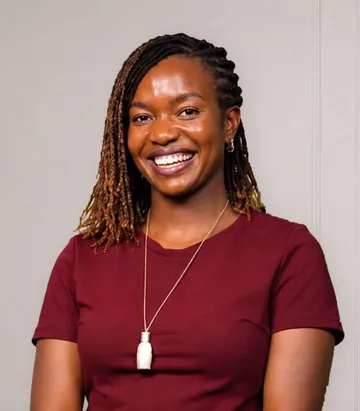
Your surgeon
I’m Dr Christine Nyabuto, a plastic and reconstructive surgeon in Nairobi with an MMed in Plastic, Reconstructive & Aesthetic Surgery from the University of Nairobi and fellowship training in microsurgery. At consultation I explain your options, including not having surgery, in plain language. Read about my training and qualifications.
Questions patients ask about BBL surgery in Nairobi
Does a BBL use implants?
No. A BBL uses your own fat. Buttock implants are a separate procedure.
How long after a BBL can I sit?
You will be asked to avoid sitting directly on your buttocks for a period after surgery, and to use a cushion under the thighs when you do sit. How long depends on your plan and how you heal, and is agreed with you.
Is a BBL safe?
No operation is free of risk, and a BBL carries a rare but serious risk of fat embolism. Following international guidance — placing fat only above the muscle, in a properly equipped hospital — is how that risk is reduced.
How much bigger will my buttocks be?
It depends on how much fat can be safely harvested, how much survives and your proportions. A natural, balanced shape is the aim; exact size cannot be promised.
Is the result permanent?
Fat that survives the first few months behaves like other fat in your body, so it can change with weight gain or loss.
Is the liposuction included in the price of a BBL?
A BBL uses your own fat, so liposuction of the donor areas is part of the operation. Ask your written plan to name the donor areas and to list the anaesthesia, hospital stay, garments and follow-up that are included.
Is the first consultation a commitment to surgery?
No. It is for information and advice. You can take time to decide, seek another opinion, or decide not to go ahead.
Sources and further reading: American Society of Plastic Surgeons — Buttock augmentation and Brazilian butt lift (opens in a new tab).
These are independent patient-information sources listed for further reading; they do not endorse this practice.
No price, outcome or recovery time can be promised before an individual assessment. If you have urgent symptoms, seek urgent medical care.