Breast reduction in Nairobi, Kenya: relief from back, neck and shoulder pain
Very large or heavy breasts can affect comfort, movement and how you feel day to day. A consultation with me is a chance to talk about your symptoms, understand your options — including non-surgical ones — and decide in your own time.
At a glance
- The concern
- Pain, skin irritation or limits on daily life linked to the size and weight of your breasts.
- What your consultation clarifies
- Your symptoms, health and, with your consent, an examination; the options, including not having surgery; scars, sensation and breastfeeding.
- Fees
- A written quotation for your individual plan after assessment. No fees are published.
- Follow-up
- Reviews of your wounds and recovery, and how to contact the clinical team, are agreed before surgery.
Is breast reduction right for me?
Whether breast reduction is right for you is an individual decision made after assessment.
Signs a breast reduction may help: pain, rashes and bra strap grooving
People who ask about breast reduction often describe a mix of physical and personal concerns. Not everyone has all of them, and none of them has to be “bad enough” before you are allowed to ask.
- Back, neck or shoulder pain, or grooves from bra straps.
- Skin irritation, rashes or soreness in the fold beneath the breasts.
- Difficulty exercising, sleeping comfortably or finding clothes and bras that fit.
- Feeling self-conscious, or that breast size is out of proportion with the rest of the body.
- Unwanted attention or stigma linked to breast size.
How much smaller can I go? Cup size and proportion
The size you end up with is agreed with you, not chosen for you. We talk about the size and shape you would feel comfortable with, and I explain what is realistic for your frame, your breast tissue and your skin.
A cup size cannot be promised. Bra sizes vary between brands, and the amount of tissue that can safely be removed depends partly on keeping a healthy blood supply to the nipple and the remaining breast. The aim is breasts that feel lighter and look in proportion with the rest of your body, rather than a particular number on a label.
Breast lift or breast reduction: compare what changes with each
Further reading: ASPS overview of breast reduction.
What an assessment involves
The first consultation starts with a conversation: what is troubling you, what you hope will change and what matters to you about the future. I will then ask about your health and, with your consent, examine you.
- Your symptoms, how long you have had them and what you have already tried.
- Your general health, medicines, allergies, smoking or nicotine use and any previous breast surgery.
- Personal or family history of breast disease, and any breast changes you have noticed.
- Plans for pregnancy and breastfeeding.
- An examination and measurements, with your consent. You are welcome to ask for a chaperone or bring someone with you.
- Whether breast imaging or other tests are advisable before surgery, depending on your age and history.
Clinical photographs, if needed for your medical record, are taken only with your consent and are kept as part of your confidential record.
Suitability and when more assessment is needed
Sometimes I may recommend further tests, a different approach first, or waiting. This may be the case if:
- You smoke or use nicotine, which can affect wound healing.
- You have diabetes, a blood-clotting problem or another condition that affects healing or anaesthesia.
- You are planning significant weight loss or gain, since breast size can change with weight.
- You are pregnant, recently pregnant or breastfeeding.
- A breast lump, nipple change or other finding needs investigating first.
- Your breasts may still be developing.
None of these automatically rules surgery out. They are reasons to plan carefully, and sometimes to refer you to or work with other specialists.
Options and alternatives
Surgery is one option, not the only one. Depending on your symptoms, it may be worth trying or combining:
- A professionally fitted, supportive bra, including sports bras for exercise.
- Physiotherapy or exercises for back, neck and shoulder symptoms.
- Treatment and skin care for rashes beneath the breasts.
- Weight management, where this is relevant and something you want to pursue.
- Choosing to wait, or deciding not to have surgery at all.
If you choose surgery, there are different techniques, which vary in incision pattern and in how breast tissue and the nipple are reshaped. I will explain which approaches suit your anatomy and goals, and why.
Scar patterns: lollipop or anchor, and how each settles on darker skin
Breast reduction always leaves scars. The two common patterns are the vertical (“lollipop”) pattern and the anchor (inverted-T) pattern; the figure and table below show where each sits and what decides the choice.

| Vertical (“lollipop”) pattern | Anchor (inverted-T) pattern | |
|---|---|---|
| Where the scars sit | Around the areola and down from the areola to the breast fold. | Around the areola, down from the areola to the breast fold, and also along the fold. |
| What decides the pattern | How much tissue is removed and how much skin needs tightening. I explain which pattern suits you and why. | |
| How the scars change | Scars usually soften and fade over time but do not disappear. | |
| Darker skin and keloids | Some people, including many with darker skin, are more prone to raised or keloid scars, so scar care is part of the plan. | |
| What to ask | Which technique and scar pattern would you recommend for me, and why? | |
If you have had raised scars or keloids before, tell me at your consultation.
Will I be able to breastfeed after a breast reduction?
Breast reduction may affect future milk production, because surgery can remove glandular tissue and affect milk ducts and nerves. Some people breastfeed after breast reduction, but a full milk supply cannot be guaranteed.
Pregnancy and breastfeeding can also change breast size and shape again after surgery. Some people decide to wait until they have completed their family; others decide that relief now matters more. Both are valid choices, and this is worth discussing openly at your consultation. If you become pregnant after surgery, tell your maternity and infant-feeding team.
Further reading: CDC guidance on breast surgery and breastfeeding; Australian Breastfeeding Association on breastfeeding after breast reduction.
Recovery: work, exercise, driving and help at home
Breast reduction is usually performed under general anaesthesia. Afterwards you may have dressings, a supportive bra and sometimes drains. How long you stay in hospital, when you can return to work, drive and exercise, and when you are ready to travel are advised individually; there is no fixed timetable that suits everyone.
| Milestone | What to plan for | Question for your surgical team |
|---|---|---|
| The first days at home | Dressings, a supportive bra and sometimes drains; swelling, bruising and discomfort can occur. Arrange help with lifting, housework and caring for young children. | What are my wound-care instructions, medicines and review dates? |
| Walking | Short, gentle walks around the home are encouraged from the first days to help circulation and lower the risk of blood clots. Build up the distance gradually as comfort allows. | How far should I walk at first, and what should make me stop and call? |
| Desk work and other work | Return to work depends on the job, rather than a single universal date. Sitting at a computer, commuting, standing all day and lifting are different demands. | How will we plan my return to work? Would a phased return or lighter duties help? |
| Driving | You should be able to control the vehicle comfortably and safely, and meet any advice about medicines or restrictions. | What applies to me before I drive again? |
| Lifting and exercise | A gradual return to exercise and to work that involves lifting or reaching. An online week-by-week list is not permission to restart running, gym work or heavy lifting. | Which movement is encouraged early, which activities should I avoid, and how do I build back safely? |
| Follow-up reviews | Reviews check your wounds and recovery. Keep them even if you feel well; swelling, scars and breast shape continue to change over time. | When are my reviews, and how do I contact the clinical team if I have a concern? |
| What changes the timeline | The operation, your health, how you heal and the work you do. Your team can adapt the plan if healing is slower than expected. | What might make my recovery take longer, and when can I travel? |
No fixed timetable is given here: timings are advised individually after your operation.
Follow-up reviews check your wounds and recovery. Before surgery you will be told how to contact the clinical team if you have a concern, and what to do in an emergency.
Further reading: ASPS overview of breast reduction recovery.
Risks: healing, changed sensation and asymmetry
Many people report relief from physical symptoms and greater comfort after breast reduction, but relief cannot be guaranteed and results vary from person to person. Breasts continue to change with age, weight, pregnancy and hormones, and perfect symmetry is not achievable.
Like any operation, breast reduction carries risks. I will discuss how they apply to you. They include:
- Bleeding, infection and delayed wound healing.
- Permanent scars, which can become raised, thickened or keloid.
- Changes in nipple or breast sensation — reduced, increased or lost — which may be temporary or permanent.
- Uneven breast size or shape, and changes in nipple position.
- Firm lumps from fat necrosis (damaged fatty tissue).
- Rarely, partial or complete loss of nipple and areola tissue.
- Reduced ability to breastfeed.
- Risks of anaesthesia and blood clots.
- The possibility of further surgery.
Further reading: ASPS list of breast reduction risks.
Does SHA (formerly NHIF) or private insurance cover breast reduction in Kenya?
Cover is decided by the Social Health Authority (SHA), which replaced NHIF, and by each private insurer — not by my practice — and the rules differ between schemes and change over time. Some insurers consider breast reduction when it is recommended for symptoms such as pain or skin problems; others treat it as cosmetic and exclude it.
Before you commit to a date, ask your insurer or SHA directly whether breast reduction is covered under your scheme, what is excluded, whether pre-authorisation is needed, and which medical reports they require. My practice can explain what documentation is available after your assessment.
How much does breast reduction cost in Nairobi, Kenya?
After your assessment, my practice gives you a written quotation for your own surgical plan. Every breast reduction is quoted individually, so no fee or price range is published on this website.
| Part of the quotation | What can change it | What to ask |
|---|---|---|
| Surgeon’s fee | The surgical plan: the technique and the length of the operation. | Is this the surgeon’s fee only, or does it include the facility and anaesthesia? |
| Facility and theatre | The hospital, theatre time, nursing care and whether you stay overnight or longer. | Which facility charges are included in my quotation, and what would an extra night cost? |
| Anaesthesia | Provided by an anaesthetist, often charged separately by the facility or the anaesthetist. | Who provides the anaesthesia, and is their fee included? |
| Tests before surgery | Blood tests, and breast imaging if advised for your age and history. | Which tests are included? |
| Examination of removed tissue | Laboratory examination of removed tissue, if advised. | Is laboratory examination included, or charged separately? |
| Medicines, dressings and garments | Medicines to take home, dressings and a post-operative bra. | Which medicines, dressings and garments are included? |
| Follow-up | The follow-up reviews after surgery. | How many follow-up visits are included, and are later visits charged? |
| Further treatment | An extra night in hospital, treatment of a complication or a second operation. | What would be charged if I needed further treatment or a second operation? |
Your travel, accommodation and a companion’s expenses are never part of a surgical quotation. Not every quotation includes every item above.
Ask what your quotation includes and what would be charged separately, including the cost of treating a complication.
How a quotation is put together for any operation is explained in what plastic surgery costs in Kenya, with a printable checklist of questions to ask before paying a deposit.
A written quotation follows your assessment.
Your consultation: questions to ask and where to go
Questions to ask before breast reduction surgery
It can help to write your questions down before your appointment. Questions patients often find useful include:
- Which technique and scar pattern would you recommend for me, and why?
- What size and shape is realistic for my frame and breast tissue?
- How might surgery affect nipple sensation and breastfeeding in future?
- Are any tests or breast imaging needed before surgery?
- Where will the operation take place, and who provides the anaesthesia?
- What help will I need at home, and when will my follow-up reviews be?
- What would happen if I had a complication, and how do I reach the clinical team?
- What does my quotation include, and what would be charged separately?
Consultations in Nairobi
I see patients by appointment at Fortis Suites, Hospital Road, Nairobi. The appointment time and directions are confirmed when your appointment is arranged. If surgery is planned, it takes place in Nairobi, and the treatment facility is confirmed in your written plan.
If you live elsewhere in Kenya or outside Kenya, an initial remote discussion by phone or video can be arranged before you travel. An in-person examination is still needed before surgery is agreed.
If you live elsewhere in Kenya, you can contact my practice before travelling to Nairobi for a breast reduction consultation. We will discuss the assessment and how follow-up would be arranged. Planning your consultation and follow-up
I’m a female plastic surgeon. If you’d find it easier to talk about your breasts and your symptoms with a woman, you’re welcome here. Nothing is examined without your consent, and you can take time to decide. Choosing a female plastic surgeon in Nairobi
Patient stories
Shared with each patient’s documented permission. Each describes one person’s experience; your own outcome may differ.
- Seeking comfort through breast reduction — A breast reduction care journey — symptoms, counselling and recovery.
- Considering breast reduction with the future in mind — A breast reduction story about counselling, future breastfeeding and an informed choice.
Patient guides
- Breast lift or breast reduction — what changes with each?A breast lift mainly reshapes and raises the breast. A breast reduction removes breast tissue to reduce size and weight and usually lifts the breast at the same time. If heaviness is your main concern, tell your surgeon. If your priority is a change in shape while keeping a similar size, say that too. These goals lead to different discussions.
- Can you breastfeed after breast reduction? Questions to discuss firstIf you are considering breast reduction and hope to breastfeed in the future, make that part of the first consultation. It is an important preference and deserves a clear discussion before any decision.
- Breast reduction recovery: planning work, exercise and help at homeOne of the most useful questions before breast reduction is practical — what will recovery mean for my normal week? Planning ahead can make that period easier to manage.
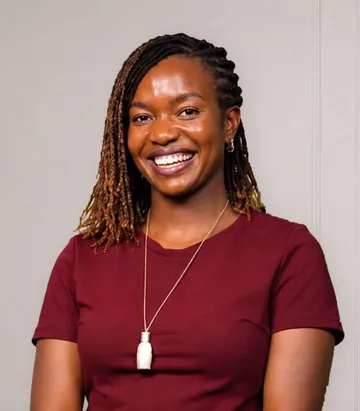
Your surgeon
I’m Dr Christine Nyabuto, a plastic and reconstructive surgeon in Nairobi with an MMed in Plastic, Reconstructive & Aesthetic Surgery from the University of Nairobi and fellowship training in microsurgery. At consultation I explain your options, including not having surgery, in plain language. Read about my training and qualifications.
More questions about breast reduction in Nairobi
Do I need to know which operation I want before booking?
No. You can describe your symptoms and concerns, and the consultation explores whether breast reduction or another option suits you.
What should I send when I request an appointment?
Only your name and contact details, and optionally a preferred date and where you are travelling from. Please do not send photographs or medical records through the website, email or WhatsApp; the practice will explain how to share clinical information.
Will I be able to breastfeed afterwards?
Possibly, but it cannot be guaranteed. Surgery can reduce milk supply. If future breastfeeding matters to you, raise it at your consultation so it can be part of your decision.
Where will the scars sit?
Usually around the areola and down to the breast fold (vertical or “lollipop” pattern), sometimes also along the fold (anchor or inverted-T pattern). Scars soften and fade over time but do not disappear.
How will we plan my return to work?
It depends on the job rather than a single universal date. Wound healing, comfort and your surgeon’s assessment guide the decision; ask whether a phased return, lighter duties or additional leave would help.
What is included in the quotation?
It depends on your plan, and not every quotation includes every item. Ask what is included and what would be charged separately, including the cost of treating a complication.
How can I check my insurer’s requirements?
Ask your insurer or SHA directly, before you commit to a date. Cover is decided by them, not by my practice. My practice can explain what documentation is available after your assessment.
Can my breasts get bigger again?
Breasts can change after reduction with weight gain, pregnancy, hormones and age. A stable weight before surgery helps, but future changes cannot be ruled out.
How long will I need to stay in Nairobi?
It depends on your plan, your health and how your recovery progresses. If you are travelling, avoid booking a fixed return journey until your surgeon has advised you.
Will I need a mammogram or other tests first?
Sometimes. Whether breast imaging or other tests are advised depends on your age, history and examination.
Is the first consultation a commitment to surgery?
No. A consultation is for information and advice. You can take time to decide, seek another opinion, or decide not to go ahead.
Sources and further reading: American Society of Plastic Surgeons — Breast reduction (opens in a new tab); ASPS — Breast reduction risks and safety (opens in a new tab); ASPS — Breast reduction recovery (opens in a new tab); British Association of Aesthetic Plastic Surgeons — Breast reduction (opens in a new tab); CDC — Breast surgery and breastfeeding (opens in a new tab); Australian Breastfeeding Association — Breastfeeding after breast surgery (opens in a new tab).
These are independent patient-information sources listed for further reading; they do not endorse this practice.
No price, outcome or recovery time can be promised before an individual assessment. If you have urgent symptoms, seek urgent medical care.